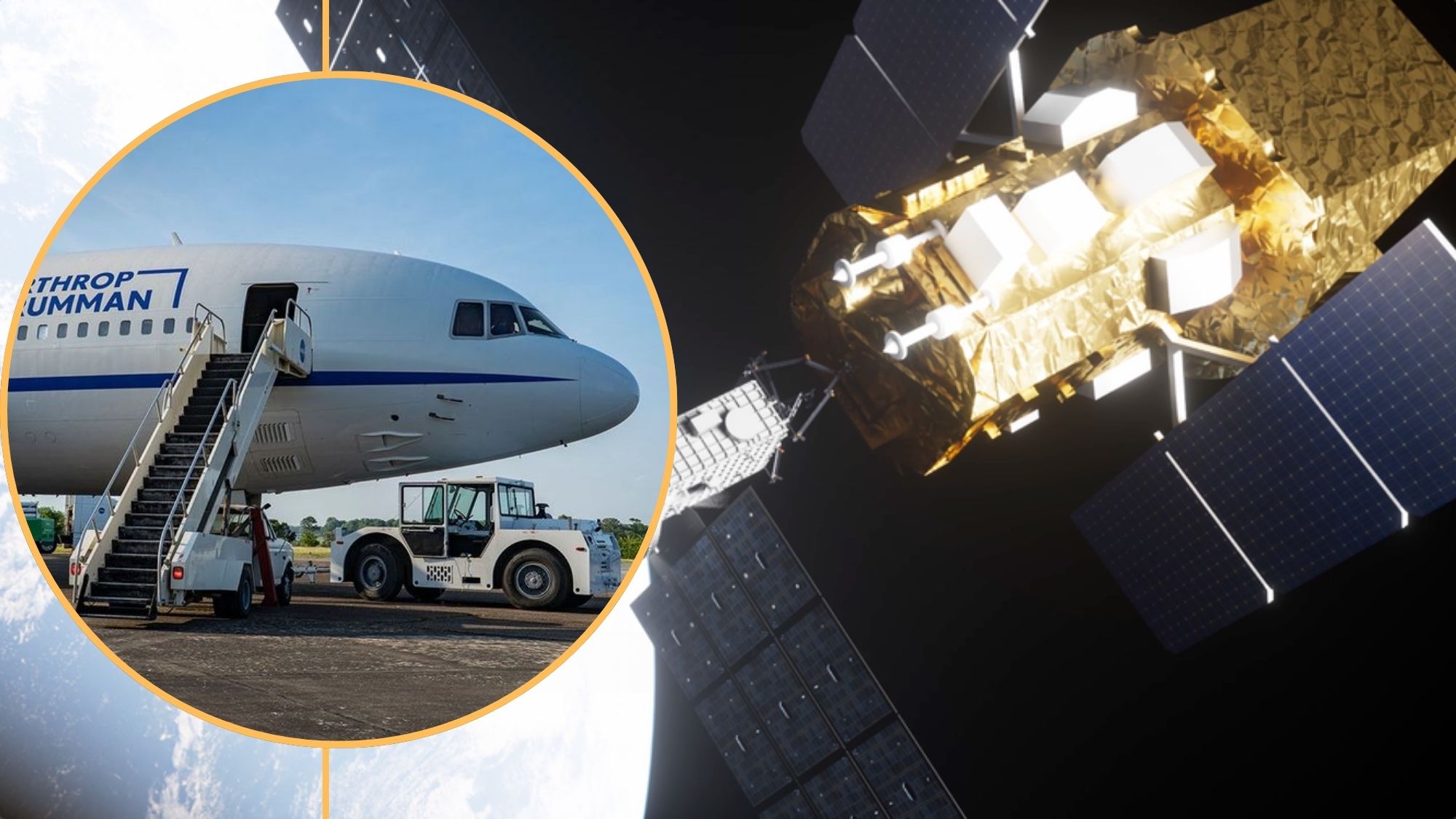
NASA and Katalyst Space Technologies have launched the Swift Boost mission, sending the LINK spacecraft toward the Neil Gehrels Swift Observatory in an effort to raise its orbit and delay reentry.
NASA and Katalyst Space Technologies have launched a first-of-its-kind rescue mission for the Neil Gehrels Swift Observatory, sending the LINK spacecraft into orbit to try to raise the telescope before it reenters Earth's atmosphere and burns up.
The Swift Boost mission lifted off on July 3 aboard a Pegasus XL rocket carried by Northrop Grumman's Stargazer aircraft over the Marshall Islands. Coverage of the launch said the flight was successful and placed LINK on course for a rendezvous with Swift in about a month.
Swift is a NASA gamma-ray observatory that launched in 2004. It has remained scientifically productive well beyond its original mission life, but its orbit has been steadily decaying. NASA and Katalyst are now trying to reverse that trend before the spacecraft drops too low for a safe recovery.
How the rescue mission came together
Public reporting first described a plan for a commercial spacecraft to boost Swift's orbit in 2025. NASA and Katalyst were then reported to have begun testing for the effort in April 2026, and the launch followed earlier delays tied to weather and a software issue during preparations.
The spacecraft involved is LINK, built by Katalyst Space Technologies. In coverage of the mission, the vehicle was identified as both "Link" and "LINK". It was launched on a Pegasus XL rocket, making this the rocket's final flight, according to Space.com.
NASA and Katalyst have framed the effort as both a practical attempt to save a valuable observatory and a test of commercial in-space servicing. If the mission works as planned, it would show that a private spacecraft can rendezvous with and reboost a government satellite that was never originally designed to be serviced.
Why Swift is at risk
Swift's orbit has been decaying for years, which has put the observatory on a path toward eventual reentry. The mission is meant to stop that decline by moving the spacecraft to a higher, safer altitude.
That is not a routine operation. Swift has no docking port, so LINK will need to identify a safe capture point, match motion with the observatory and then carry out the boost sequence without damaging the telescope.
The observatory has been a productive NASA science mission, especially for studying gamma-ray bursts. Even though it launched more than two decades ago, it remains valuable enough that NASA is trying to extend its life rather than let it burn up.
What happens next
The launch is only the first step. LINK now has to rendezvous with Swift and complete a careful capture attempt before any orbit-raising maneuver can begin.
If the capture and boost succeed, it would be the first time a private spacecraft captures and reboosts a government satellite. That would make the mission a precedent-setting demonstration for orbital maintenance, rescue and future servicing efforts.
For now, the outcome is still uncertain. LINK is in orbit, but the hard part lies ahead, and NASA and Katalyst will keep watching whether the spacecraft can complete the rendezvous before Swift's orbit decays too far.
The mission also carries broader industry stakes: if it works, it could help establish commercial servicing as a viable way to preserve useful spacecraft that were never built with repairs or towing in mind. If it fails, the telescope's gradual descent toward reentry will continue.
Revision note
Expanded launch report with full mission chronology, technical context, and next steps.